
What Women's Preventive Care Is Actually Free — and the Traps That Un-Free It
A surprisingly long list of women's health care is legally free with most insurance — no copay, no deductible, nothing. It's not a promotion or a plan perk; it's federal law, and in June 2025 the Supreme Court upheld it.
And yet people get bills for it constantly. That's not usually a scam — it's a short, specific set of ways a free visit quietly becomes a billed one. This guide gives you both lists: everything that's covered at zero cost-sharing, and the four traps that un-free it — plus exactly how to fight a bill that shouldn't exist, and the Arizona programs that cover the core screenings even with no insurance at all.
- ACA-compliant plans must cover a defined list of women's preventive services with $0 cost-sharing — in-network, on the recommended schedule. The Supreme Court affirmed this in June 2025.
- On the list: the annual well-woman visit, cervical and breast cancer screening, all FDA-approved contraception, prenatal services, breastfeeding support, and STI/mental-health/IPV screening.
- ⚠️ The four traps: out-of-network · a diagnostic follow-up or a symptom you raise (billed as a separate "problem" visit) · off-schedule timing · exempt plans.
- Free applies to the SCREENING, not always the follow-up it triggers. That's the "but I got a bill" surprise.
- A wrong bill is usually fixable — most are miscoding, and a phone call corrects them.
01 · WHAT'S FREEThe covered list, and the law behind it
The Affordable Care Act requires ACA-compliant plans — which is the great majority of private coverage — to pay for a defined set of preventive services with no cost-sharing. For women specifically, the list is set by HRSA's Women's Preventive Services Guidelines — and it is broad.
The single most useful habit: read your EOB, not just the bill. The Explanation of Benefits (it says "this is not a bill") shows how each service was coded and what the plan paid. If a well-woman visit shows up with cost-sharing, or a preventive service got applied to your deductible, the EOB is where you'll spot it — usually weeks before the bill arrives, which gives you time to call while it's easy to fix.
When you book, use the words "well-woman visit" or "preventive visit" — not "check-up" or "physical." The appointment type the office schedules influences how it's coded, and a vague booking is easier to bill as a problem visit. Booking it explicitly as preventive, and repeating that at check-in, is the cheapest insurance there is against a surprise charge.
The legal footing is current, and worth stating precisely because a lot of pages get it wrong in both directions. In June 2025, in Kennedy v. Braidwood Management, the Supreme Court upheld the ACA's requirement that plans cover services recommended by the U.S. Preventive Services Task Force with no cost-sharing. The women's-specific services (contraception, the well-woman visit, breastfeeding support) flow from a related agency, HRSA, whose authority was not resolved by that ruling and remains in litigation in the lower courts — but those services continue to be covered without cost-sharing in practice.
Don't let anyone tell you this is either permanently settled or about to vanish — both overstate it. The honest status: the core requirement is on firm footing after a 2025 Supreme Court win, the women's-specific list is still covered in practice, and one related legal thread is unresolved. For your next appointment, nothing has changed: the covered list above is free, in-network, on schedule. The authoritative version lives at healthcare.gov and HRSA's guidelines, which outrank any front desk.
02 · THE TRAPSFour ways free care gets un-freed
Almost every "but it was supposed to be free" bill traces to one of four things. None of them are secret, and all four are avoidable with one question at check-in.
"Free" covers the screening. It doesn't always cover what the screening finds — and that gap is where the bills live.
1. Out-of-network
The $0 rule is in-network only. Verify the provider, the lab, AND the imaging center — a free visit with an out-of-network lab produces a very non-free lab bill.
2. The symptom you mention (the big one)
Raise a new problem and part of the visit can legitimately become a "problem" service, billed separately. Correct billing is often two codes: the free preventive visit plus an office-visit charge for the issue. This is real, not a trick.
3. Screening → diagnostic
A screening test is free; the diagnostic follow-up it triggers (a diagnostic mammogram, a biopsy, a repeat test to investigate a finding) often carries cost-sharing.
4. Off-schedule or exempt plan
A second well-woman visit in one plan year, or an off-year screening with no medical reason, may not be covered — and grandfathered or short-term plans are exempt from the rule entirely.
"So I should just not mention any symptoms, to keep it free." No — do not do this. Withholding a symptom to dodge a $25 copay is a bad trade against your own health, and it's exactly the wrong lesson. The separate charge for a problem you raise is legitimate: your clinician did additional work, and coding it is correct. The move isn't silence — it's transparency. Ask at check-in: "If I bring up a concern today, will that add a separate charge, and roughly how much?" Then decide with the information, instead of being surprised by it on the statement.
"Free preventive care means all my lab work is free too." Not necessarily. The screening labs on the recommended list are covered, but a clinician can order additional bloodwork that isn't classified as preventive — and that portion can carry cost-sharing. As one billing explainer put it, "not all the blood work the doctor orders will be considered preventive at no cost-sharing." You should still get the plan's negotiated rate, but "the visit was free" doesn't automatically extend to every test ordered during it. If cost matters, ask which labs are preventive and which aren't before the draw.
The law made the care free. The billing codes decide whether it stays free — and codes can be corrected, if you ask.
03 · FROM THE WEBWhat actually happens to people
"I booked a well-woman visit and got charged for a diagnostic — why?"
A medical biller's answer is the clearest explanation there is: *"The fact that you brought up a concern about your birth control, vs just having it renewed, is most likely what changed the coding."* **Mentioning a problem changes the code, and the code changes the bill.** It's not that the visit stopped being preventive — it's that a *second*, billable service happened inside it.
"I spoke about menopause during my wellness visit and now have a $25 copay."
This is the trap in a single sentence, and it's incredibly common. The wellness portion stayed free; the menopause discussion became a separately-billed problem. **Knowing this in advance doesn't stop you from raising menopause — it stops you from being blindsided by the copay.**
"My office submitted TWO claims for one visit — is that allowed?"
Usually yes: *"correct billing should be two codes — the preventive code AND the office-visit code."* Two claims for one appointment is often *correct* billing, not double-billing. What's worth checking is whether the preventive portion was correctly coded as $0.
"They billed my whole annual as an office visit — can I fix it?"
Often, yes. Patients who called back and said *"I expressly asked for a preventive visit only"* frequently report that the office corrected the coding or waived the charge — not guaranteed, but a common outcome, and the whole point of the next section.
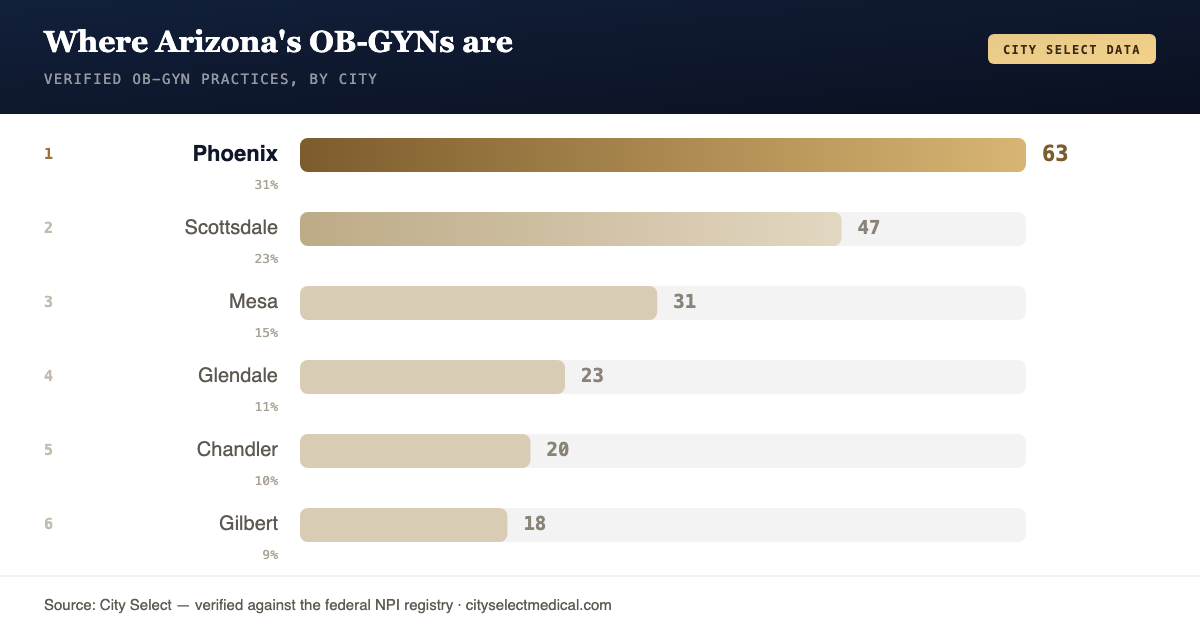
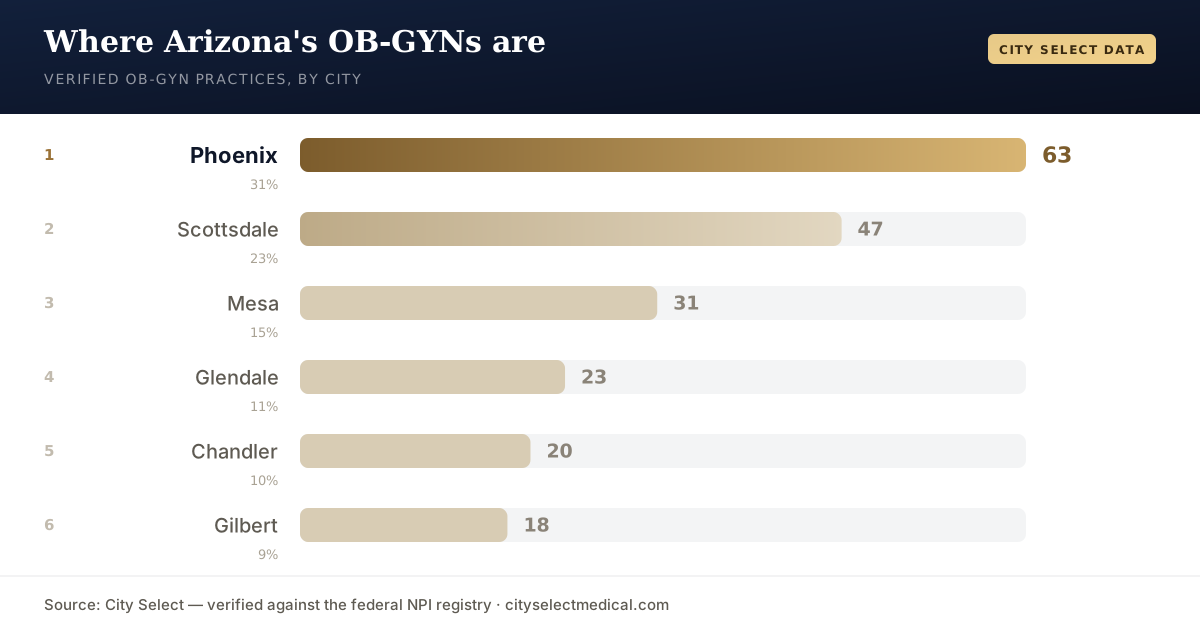
136 NPI-verified OB-GYN practices across Arizona. The single best way to protect the $0 is to confirm your provider — and their lab and imaging center — are **in-network** before the appointment.
04 · THE FIXHow to dispute a wrongly billed preventive claim
Miscoded preventive claims are common and correctable. The process is boring, and it works — most are resolved with one phone call.
Get the EOB and find the charge
Match it against the covered list; note the date and the exact service. Ask for an itemised bill with the billing codes if you don't have them.
Call the provider's billing office first
"This was a preventive service under the ACA — can you review the coding?" Most corrections happen right here; offices resubmit corrected claims routinely.
Call your insurer second
If the office insists the coding is right, ask your plan why a listed preventive service processed with cost-sharing, and request a claim review.
Appeal in writing if both stall
Plans are required to offer a formal appeals process (it's printed on the EOB). Preventive-coverage appeals with a clear paper trail frequently succeed.
Don't pay-and-forget under pressure
A documented bill in dispute is not a collections event. A paid miscoded claim is much harder to unwind than an unpaid one.
Say the magic sentence at check-in, before any of this is needed: "I'm here for my preventive well-woman visit. If anything today would be billed differently, please tell me before we do it." It puts the office on notice, it's completely reasonable, and offices that post "additional concerns may be billed" signs are telling you they expect exactly this conversation. Thirty seconds at the desk prevents most of the phone calls above.
05 · ARIZONAThe state programs — including when you have no insurance
Arizona has real coverage many people don't know about:
AHCCCS (Arizona's Medicaid) for pregnancy — covers prenatal care, labor and delivery, and postpartum visits with no premiums and no copays, for pregnant women up to 156% of the federal poverty level. ★ The big one: since April 2023, postpartum coverage lasts a full 12 months after pregnancy ends (up from 60 days), and continues for that year regardless of income changes. Apply at Health-e-Arizona Plus (healthearizonaplus.gov).
Well Woman HealthCheck Program (Arizona DHS) — free breast and cervical cancer screening for uninsured and underinsured women under 250% of the poverty level (breast screening ages 40–64, or 21+ with symptoms; cervical 21–64), for those not on Medicare Part B or AHCCCS. This is the no-insurance path to the two core cancer screenings.
Being uninsured in Arizona does not mean going without the core screenings. Between Well Woman HealthCheck (free breast and cervical screening under 250% of poverty), Title X clinics (sliding-scale contraception and screening), and AHCCCS (full pregnancy coverage with a year of postpartum care), there is a real path to preventive care at every income level. The programs are underused mostly because people don't know they exist — which is the entire reason this section is here. Check HEAplus for your own eligibility before you assume you can't afford care.
Title X clinics — contraception and screening on a sliding scale regardless of insurance.
(Income thresholds change — confirm the current figures at azahcccs.gov and azdhs.gov, and use HEAplus to check your own eligibility.)
How we source this
We rebuilt this article to put its legal footing on current ground and to source the billing reality from people it actually happened to.
- The law is stated as of 2025. In June 2025 the Supreme Court upheld the ACA preventive-services requirement (Kennedy v. Braidwood). We say so — and we also say, accurately, that the ruling addressed the USPSTF structure and left the HRSA women's-services question in ongoing litigation. Pages that call this "settled forever" or "about to disappear" are both wrong; we split the difference because that's where the facts are.
- The covered list comes from HRSA and HealthCare.gov, the authoritative sources — not from any clinic's marketing page.
- The billing traps are documented by patients and billers, because the "two codes for one visit" reality is invisible until it happens to you. We deliberately do not advise hiding symptoms to stay free — that's harmful — and instead give you the one sentence to ask at check-in.
- The Arizona programs are verified against AHCCCS and Arizona DHS, with a note to re-check the income thresholds, which change.
- This is a coverage and cost article, not a policy one. We describe what's covered and how to access it, and we don't editorialize on health policy.
The bottom line
The covered list is long and legally yours — the well-woman visit, cervical and breast screening, contraception, prenatal care, and more, free with almost any ACA-compliant plan, in-network, on schedule, and affirmed by the Supreme Court in 2025.
The four traps are all avoidable with one question at booking and one look at the EOB after. The biggest one isn't a scam — it's the separate charge for a symptom you raise, which is legitimate, so ask how it'll be coded rather than staying silent about your health. And when a bill is wrong, it's usually miscoding: call the billing office, and it's often waived.
If you're in Arizona with no insurance, the core screenings are still within reach — Well Woman HealthCheck, Title X, and AHCCCS for pregnancy (now with a full year of postpartum coverage). Start from an insurance-filtered, verified list: Arizona OB-GYNs.
Frequently asked questions
Is women's preventive care really free — and is that still the law?
Yes, for almost all plans, and yes — the Supreme Court affirmed it in June 2025. Under the Affordable Care Act, ACA-compliant plans must cover a defined list of preventive services with no copay, coinsurance, or deductible when you get them in-network on the recommended schedule. In Kennedy v. Braidwood Management, the Court upheld the requirement for services recommended by the U.S. Preventive Services Task Force. The women's-specific list (contraception, the well-woman visit, breastfeeding support) is set by a related agency, HRSA, whose authority is still being litigated in lower courts — but those services remain covered without cost-sharing in practice.
Is birth control free with insurance?
ACA-compliant plans must cover FDA-approved contraceptive methods without cost-sharing. The catch is formularies: your specific brand may require substituting a covered equivalent, or going through an exception process. If you're charged, ask the plan for its covered options in your method category and how to request an exception for a specific product your clinician recommends.
Are mammograms free every year?
Screening mammograms are covered without cost-sharing on the recommended schedule — USPSTF's 2024 recommendation is every two years for women aged 40 to 74, and some plans and other guidelines support annual screening. The trap: if imaging finds something and you need a diagnostic mammogram or ultrasound to look closer, that follow-up is diagnostic and cost-sharing can apply. Ask your plan whether it covers diagnostic breast imaging at no cost — a growing number do.
Why did I get a bill for a 'free' visit where I mentioned a symptom?
Because raising a new problem can legitimately turn part of the visit into a diagnostic or 'problem' service, billed separately. Correct billing is often two codes: the preventive visit (free) plus a problem-focused office visit (with cost-sharing) for the issue you raised. This isn't a scam — it's how the coding works. Do not hide symptoms to avoid it; that's bad for your health. Instead, ask at check-in: 'If I bring up a concern, will that add a separate charge?' so nothing is a surprise.
Does free preventive care apply before I've met my deductible?
Yes — that's the entire point of the rule. Covered preventive services bypass the deductible at in-network providers. If a clearly preventive service was applied to your deductible, that's exactly the miscoding worth a phone call to the billing office.
Do all plans have to cover this?
Most, but not all. Grandfathered plans (a shrinking set that predate the ACA and haven't changed much) and short-term or limited-benefit plans are exempt from the preventive-services requirement. Marketplace plans and standard employer plans must comply. If you're on a non-marketplace plan of unclear type, ask specifically whether ACA preventive rules apply before assuming anything is free.
What if I'm uninsured in Arizona?
There are real paths to the core screenings. Arizona's Well Woman HealthCheck Program offers free breast and cervical cancer screening for uninsured and underinsured women under 250% of the federal poverty level (breast screening ages 40–64, or any age 21+ with symptoms; cervical 21–64), for those not on Medicare Part B or AHCCCS. Title X family-planning clinics offer contraception and screening on a sliding scale regardless of insurance. And if you're pregnant, AHCCCS covers pregnancy care with no premiums or copays up to 156% of the poverty level.
What does AHCCCS cover — and did postpartum coverage really get longer?
Yes, and it's a big change many people miss. As of April 2023, Arizona extended AHCCCS postpartum coverage from 60 days to a full 12 months after pregnancy ends, and it continues for that year regardless of income changes. AHCCCS covers prenatal care, labor and delivery, postpartum visits, contraception, and family planning for eligible members, with no monthly premiums and no copays. Apply through Health-e-Arizona Plus (healthearizonaplus.gov).
Find a verified ob-gyn in Arizona
Every ob-gyn on City Select is sourced from the federal NPI registry and organized by city and specialty — no pay-to-rank, no mystery. Filter by your city and insurance:
 Choosing Care
The Well-Woman Exam: What Actually Happens, and How to Make It Yours
One visit a year, and most of the worry is about the part that takes two minutes. Here's what actually happens — and the accommodations you're entitled to ask for.
 Conditions
Pap Smears and HPV Tests: The Schedule by Age — and What an Abnormal Result Really Means
Screening got less frequent and less invasive. Here's the schedule by age — and, because it's the question that actually scares people, what an abnormal result really means.
 Choosing Care
Your First Prenatal Visit: The Wait, the Tests, and What It Costs in Arizona
Positive test in hand, and the internet is yelling nine things at once. The calm version: why you wait, what really happens, and the Arizona coverage that can start immediately.
Written by the City Select editorial team and edited by Alan S., Senior Editor. Drafted with AI assistance and checked against the official sources below. City Select is not a healthcare provider, and this guide is not medical advice. Our editorial & data standards →
- HRSA — Women's Preventive Services Guidelines (the ACA no-cost-sharing list)
- HealthCare.gov — preventive care benefits for women
- KFF — Kennedy v. Braidwood: the Supreme Court upheld ACA preventive services
- USPSTF — recommended preventive services
- AHCCCS — health insurance for pregnant women (Arizona)
- Arizona DHS — Well Woman HealthCheck Program
- Health-e-Arizona Plus (apply for AHCCCS)
- NPPES NPI Registry
- How we verify
This guide is for general information and isn't medical, legal, or insurance advice. Coverage, prices, and policies change — verify current details with the relevant provider, plan, or agency, and confirm with the practice before booking. Last updated July 14, 2026.