
Menopause Care: What Good Care Looks Like — and How to Find a Provider Who Listens
Half the population goes through menopause, and it is still routinely under-treated — not because the treatments don't exist, but because the symptoms get dismissed. If you've been told you're "too young," or that what you're feeling is "just aging," you're not imagining it and you're not alone: symptom dismissal is the single most common complaint in menopause care.
This guide is built to fix that from your side. Here's what good menopause care actually covers — so you can recognize it when you find it, insist on it when you don't, and know when to walk. Plus the current hormone-therapy evidence (which is very different from what a generation absorbed twenty years ago), the real non-hormonal options, and how to find a provider who engages.
- Who treats it: OB-GYNs and many primary care providers; a Menopause Society certification is a useful extra signal.
- A good appointment covers your whole symptom picture (not just hot flashes), your risk history, and a plural options conversation — hormonal, non-hormonal, and lifestyle — with a follow-up.
- Hormone therapy is a candidacy conversation, not a verdict. For healthy women under 60 or within ~10 years of menopause, the benefit-risk balance is often favorable — individualized by history.
- Real non-hormonal options exist, including the newer drug fezolinetant (note: FDA boxed warning for rare liver injury, requires monitoring).
- ⚠️ The two failure modes are dismissal and product-funnels (pellet-and-panel packages) — both are reasons to switch, not settle.
01 · YOU'RE NOT IMAGINING ITThe symptom list, and why it gets missed
Menopause and perimenopause reach far beyond hot flashes, and the symptoms routinely get misattributed for years: night sweats and wrecked sleep, brain fog and word-finding trouble, mood changes and anxiety spikes, joint aches, heart palpitations, vaginal dryness and painful sex, urinary urgency and recurrent UTIs, hair and skin changes, and cycle chaos in the years before periods stop.
Two clinical realities make that list worth bringing on paper:
Perimenopause can start in your early 40s — sometimes the late 30s
And your periods are still coming. "Too young for menopause" is often simply wrong, because the transition starts years before periods end.
No single lab test rules it in or out
Hormones fluctuate daily during the transition, so a blood test on a given day proves little. Diagnosis is mostly history and pattern — which is why a provider who listens isn't a nicety, it's the diagnostic instrument.
Bring the list marked up
Note what's worst and what it's costing you — sleep, work, relationships. Severity drives the treatment choices, and a written list is harder to wave away than a verbal "I've been tired."
Track your symptoms for two or three weeks before the appointment, not just the day of. A simple note — what happened, when, how bad, how it affected sleep or work — turns "I've been feeling off" into a pattern a clinician can actually act on, and it captures the day-to-day fluctuation that a single office visit misses. It's also the most effective counter to being dismissed: a dated, specific record is much harder to wave away than a general complaint, and it signals that you're bringing data, not just distress.
The fact that there's no definitive test is exactly why dismissal is so common — and why it's so wrong. A provider can't order one blood test to "prove" perimenopause, so a disengaged one defaults to "your labs are normal, it's probably stress." A good one takes the pattern seriously: your age, your symptom cluster, your cycle changes. If a clinician tells you your normal labs rule menopause out, that's a sign they're not current — the guidelines say the opposite.
You are allowed to lead the appointment. This is a topic where, until the standard of care catches up, the informed patient often gets better care — so it's reasonable to open with: "I think I'm in perimenopause based on this symptom pattern, and I'd like to discuss my options, including hormone therapy." That single sentence reframes the visit from "convince me something's wrong" to "let's make a plan," and a good provider will meet you there. If yours won't, that's the clearest signal there is to find one who will.
02 · GOOD CAREWhat a good appointment actually covers
Menopause care done right is ordinary, unglamorous medicine — which is the point. A good first appointment moves through five things:
The whole symptom inventory
Not just hot flashes. What's worst, and what it's costing you. Severity, not a single headline symptom, drives the plan.
Your risk history
Personal and family history of breast cancer, blood clots, stroke, heart disease; when and how your cycles changed. This is the data that individualizes the hormone conversation.
The options menu — plural
Hormone therapy in its various forms and doses; non-hormonal prescriptions; local vaginal estrogen for genitourinary symptoms (a different, lower-risk conversation than systemic hormones); and lifestyle levers with real evidence.
A plan with a follow-up
Symptom treatment is iterative — a start-and-reassess plan with a scheduled check beats a prescription and a wave.
The long game
Menopause is when bone-density and cardiovascular-risk planning enter the picture (what screening is free).
The test of a menopause provider isn't which treatment they favor. It's whether they give you options with reasoning, or verdicts without it.
Separate the vaginal/urinary symptoms out and ask about them specifically — they have their own, lower-risk fix that gets overlooked. Vaginal dryness, painful sex, and recurrent UTIs (the "genitourinary syndrome of menopause") often respond to local vaginal estrogen, which acts where it's applied and is a different, generally lower-risk conversation than systemic hormone therapy — so it can be an option even for some women who aren't candidates for systemic hormones. Many providers won't raise it unless you do, and many women don't know to. Name the symptom directly, and ask: "Is local estrogen an option for this?"
03 · HORMONESThe hormone therapy conversation, done right
The evidence changed, and public understanding largely didn't. The 2002 headlines that scared a generation off hormones were based on a study population — older women, well past menopause — that doesn't match how hormone therapy is used today. Here's the current framing, from The Menopause Society's position statement, stated as the candidacy conversation it actually is:
- For healthy women under 60, or within about 10 years of menopause onset, with no contraindications, the benefit-risk balance is favorable for treating bothersome hot flashes and night sweats and for preventing bone loss. Hormone therapy is the most effective treatment for those symptoms.
- Starting more than 10 years after menopause, or over 60, the balance is less favorable (greater absolute risks of heart disease, stroke, and clots).
- Risk depends on the type, dose, route, timing, and whether a progestogen is used — for example, transdermal (patch/gel) delivery and lower doses may carry lower clot and stroke risk than oral.
- Certain histories change the calculus — some cancers, clotting disorders, cardiovascular disease — which is exactly what the risk-history conversation is for.
"Hormones cause cancer" — or, from the opposite clinic, "hormones are safe for everyone." These are the same failure in opposite directions, and a good provider commits neither. Blanket fear is out of date; blanket enthusiasm ignores real contraindications. The right answer to "should I take hormones?" is always "let's look at your specific history and symptoms" — and a clinician who gives you a flat yes or a flat no, without that, is telling you they've stopped individualizing. The questions that produce a real conversation: "Am I a candidate, and specifically why or why not, given my history?" · "Which form and dose would you start with, and how will we reassess?" · "What are my non-hormonal options if I decline or can't?"
"Compounded bioidentical hormones are safer and more natural." They're not — and this is where a lot of money gets spent for less safety, not more. FDA-approved hormone products (many of which are chemically bioidentical) have regulated dosing and real safety data. Custom-compounded versions — the proprietary pellets and creams sold alongside expensive "hormone panel" testing — have neither, and major medical organizations advise against them for routine use. The word "bioidentical" is not the problem; the unregulated, compounded part is. If a clinic's core product is a pellet-and-panel package, that's a business model, not evidence-based care.
04 · FROM THE WEBBeing dismissed is common — and here's what people did
"My doctor didn't take me seriously because of my age."
This is the most common story in the entire topic. One woman's summary lands hard: *"If it wasn't for the reading and research I've done, I would have just suffered the whole way through. It's exhausting having to work so hard to get listened to."* **You should not have to become your own specialist to be believed — but until the standard of care catches up, arriving informed genuinely helps.**
"Who actually prescribes HRT — GP, gyno, someone else?"
A hard truth from the community: *"gynos aren't trained in menopause care — I know it seems ridiculous, and it is, but it's also often true."* Many people report better engagement from a **nurse practitioner** or a provider who has specifically pursued menopause training. The credential to look for is the **Menopause Society certification**, and their directory lets you search for one near you.
"I'm so over being dismissed — is telehealth legit for this?"
For a lot of women who hit a wall in person, **reputable telehealth has been a real gap-filler**, and the forums are full of relief stories. Two honest caveats: the **risk-history conversation still has to happen properly** (a good telehealth provider does take a full history), and local vaginal exams or certain screenings still need in-person care. Telehealth is a legitimate door — just not a reason to skip the individualization.
"Anyone else have symptoms ignored for years?"
Painfully common — *"I had no idea I was in perimenopause until I was 50 and in desperate need of estrogen; no one ever told me."* The takeaway isn't despair, it's permission: **being dismissed is a reason to change providers, not to conclude nothing can be done.** Something almost always can.
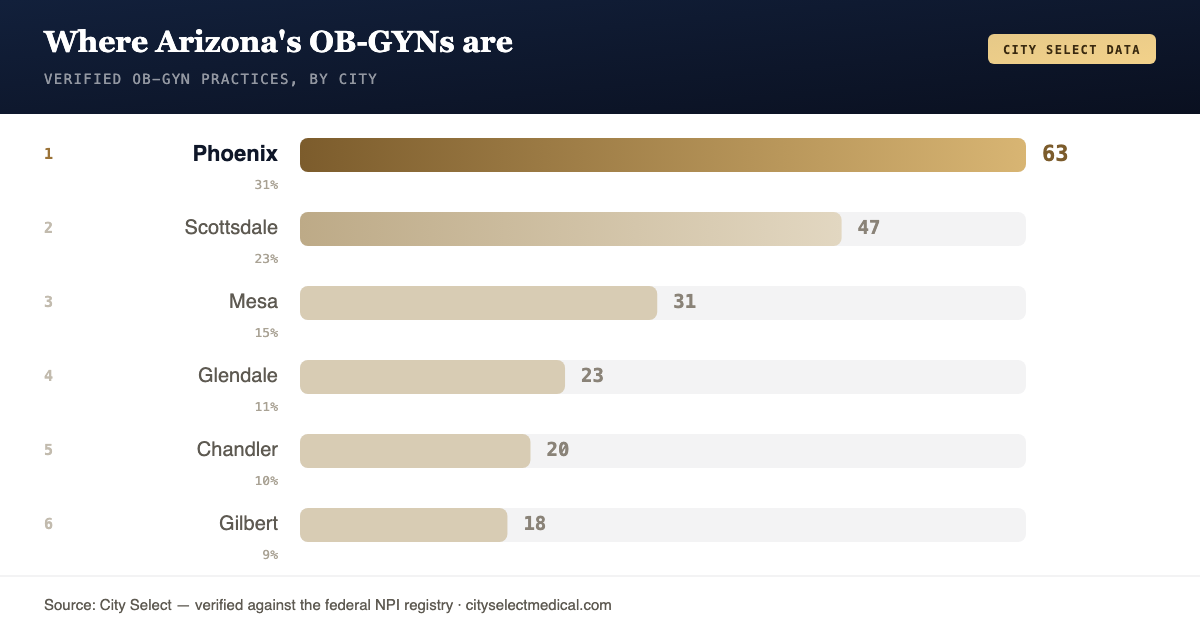
136 NPI-verified OB-GYN practices across Arizona, plus 1,058 primary care practices — many of whom manage menopause. Cross-reference with the Menopause Society's certified-practitioner directory for clinicians who've made this their focus.
05 · OPTIONS & FLAGSBeyond hormones, the red flags, and the cost
If hormones aren't right for you — by choice or by history — you are not out of options, and the alternatives are real medicine, not just supplements.
"Not a candidate for hormones" is the start of a treatment plan, not the end of one.
Certain SSRIs and SNRIs
Antidepressant-class medications that also reduce hot flashes, useful when hormones are off the table.
Gabapentin and oxybutynin
Non-hormonal prescriptions with evidence for vasomotor symptoms, especially night-time.
Fezolinetant (Veozah)
A newer non-hormonal drug approved specifically for moderate-to-severe hot flashes. ⚠️ Note the FDA boxed warning (Dec 2024) for rare but serious liver injury — it requires liver blood testing during treatment, which a good prescriber will explain and arrange.
CBT and lifestyle levers
Cognitive behavioral therapy has real evidence for the distress and sleep disruption; sleep, exercise, and reducing triggers help many people meaningfully.
"That's just aging — welcome to your fifties." This sentence is the red flag, full stop. Symptom dismissal is not evidence-based medicine, it's the absence of it — and it's the number-one reason women suffer through treatable symptoms for years. Other versions of the same failure: one-size answers (everyone leaves with hormones, or no one does, regardless of history); proprietary product funnels (compounded pellet packages, non-covered testing panels, in-office supplement lines); and no follow-up plan (menopause treatment is titration, not a one-and-done prescription). Any one of these is a reason to find another provider — and doing so is normal, not disloyal.
Before you conclude "there's nothing to be done," change the provider, not the goal. The gap between a dismissive clinician and an engaged one is enormous, and it's the single biggest variable in whether menopause is miserable or manageable. Take your written symptom list, ask specifically for an individualized options discussion, and if you don't get one, use the choosing checklist — weighting the "how do you approach menopause?" question heaviest — and the Menopause Society directory to find someone who will.
Arizona notes: menopause care bills as ordinary medical treatment (copays/deductibles apply — it's not ACA-preventive), though the annual well-woman visit that often starts the conversation is free. Medicare and AHCCCS both cover menopause care. Generic hormone therapies and most non-hormonal options are inexpensive on typical formularies; the costly route is the cash-pay boutique package, which is also the least evidence-supported. Arizona's large retirement communities — Sun City and others — mean many local primary-care and OB-GYN practices see menopausal and postmenopausal patients daily, which is worth using as a filter: ask a prospective practice how often they manage menopause.
How we source this
This is a health page for people who are often suffering and being dismissed, so we were careful with both the evidence and the tone.
- The hormone-therapy framing is The Menopause Society's, stated as the candidacy conversation it is — favorable balance for most women under 60 or within 10 years of menopause, individualized by history. We don't say hormones are "safe" or "dangerous" in the abstract, because neither is true; a flat verdict in either direction is itself the warning sign.
- The fezolinetant boxed warning is current — added by the FDA in December 2024 — and we include it because a non-hormonal option is only genuinely useful if its real monitoring requirements come with it.
- We're direct about compounded bioidenticals because the pellet-and-panel business model is widespread and not evidence-based; we distinguish it clearly from FDA-approved products.
- The dismissal is validated because it's real — the patient accounts are consistent and the pattern is well-documented — and we point toward concrete solutions (a prioritized symptom list, the Menopause Society directory, and, honestly, that NPs and reputable telehealth fill a gap when in-person care fails) rather than leaving anyone stuck.
The bottom line
Menopause care done right is ordinary medicine: a provider who takes the whole symptom list seriously, individualizes the hormone conversation by your history, offers real non-hormonal alternatives, and follows up. The two failure modes are dismissal and product-funnels — and both are reasons to switch, not settle.
Perimenopause counts, "too young" is usually wrong, no single blood test rules it out, and effective treatment exists for nearly every symptom on the list. If you've been brushed off, that's a comment on the provider, not on whether you can be helped.
Start with someone worth talking to — cross-reference the Menopause Society directory and a verified Arizona OB-GYN or primary-care practice, and go in with your written list.
Frequently asked questions
Who treats menopause — do I need a specialist?
OB-GYNs and many primary care providers treat menopause, and some clinicians hold a Menopause Society certification, which is a useful signal of focused training. But the credential matters less than engagement: a provider who takes the full symptom picture seriously and knows the current evidence. If your current doctor dismisses you — which is unfortunately common — the Menopause Society's practitioner directory is a good place to find someone who's chosen to specialize.
Is hormone therapy safe?
It's a candidacy conversation, not a yes-or-no. According to The Menopause Society, for healthy women who are under 60 or within about 10 years of menopause onset and have no contraindications, the benefit-risk balance is favorable for treating bothersome symptoms and preventing bone loss — and hormone therapy is the most effective treatment for hot flashes. The balance is less favorable if you start more than 10 years after menopause or over 60, and certain histories (some cancers, clotting disorders, cardiovascular disease) change the calculus. It's neither the danger the 2002 headlines suggested nor a fix for everyone — it's individualized by your history and reassessed over time.
What's the difference between perimenopause and menopause?
Perimenopause is the transition — often years of fluctuating hormones, irregular cycles, and frequently the heaviest symptoms. Menopause itself is technically a single day: 12 months after your last period (the average age in the US is around 51). Much of the suffering, and much of the treatment opportunity, is in perimenopause — while you still have periods — which is exactly when many women are wrongly told they're 'too young for menopause.'
Are compounded 'bioidentical' hormones better?
No — and this is a common and expensive misconception. FDA-approved hormone therapies (many of which are bioidentical in the chemical sense) have regulated dosing and real safety data. Custom-compounded versions, often sold as proprietary pellets alongside pricey testing panels, lack both, and major medical organizations advise against them for routine use. Be especially wary of a clinic that sells a hormone-pellet-plus-panel package as its main offering.
What helps hot flashes besides hormones?
Real, evidence-based options exist. Certain SSRIs and SNRIs, gabapentin, and oxybutynin are used off the shelf; cognitive behavioral therapy helps with the distress and sleep impact; and fezolinetant (Veozah) is a newer non-hormonal drug approved specifically for moderate-to-severe hot flashes. One important safety note on fezolinetant: in December 2024 the FDA added a boxed warning about rare but serious liver injury and now requires liver blood testing during treatment — so it involves monitoring your provider should explain. If hormones aren't an option for you, thin-evidence supplements are not the only other aisle.
My doctor won't take my symptoms seriously — is that normal, and what do I do?
It's unfortunately very common, and it's not you. Symptom dismissal — especially being told you're 'too young' or that it's 'just aging' — is the single most reported problem in menopause care. What to do: bring a written, prioritized symptom list; ask directly for an individualized options discussion; and if you still hit a wall, switch. Many women find better engagement with a Menopause Society–certified clinician, a nurse practitioner, or a reputable telehealth service — the point is to find someone who treats your symptoms as real, because effective treatment exists for nearly all of them.
What does menopause care cost?
Menopause visits bill as ordinary medical appointments, so copays and deductibles apply — it's treatment, not an ACA-covered preventive service, though the annual well-woman visit that often starts the conversation is free. Generic hormone therapies and most non-hormonal medications are inexpensive on most formularies. The expensive path is usually the cash-pay boutique route — pellets, custom panels, and supplement packages — which is also the least evidence-supported. Medicare and AHCCCS both cover menopause care as ordinary medical treatment.
Find a verified ob-gyn in Arizona
Every ob-gyn on City Select is sourced from the federal NPI registry and organized by city and specialty — no pay-to-rank, no mystery. Filter by your city and insurance:
 Choosing Care
How to Choose an OB-GYN: The Checklist for Every Stage
Booking a first exam, planning a pregnancy, or navigating menopause — the vetting is the same eight checks, weighted differently. Here's the whole method, plus the phone script.
 Choosing Care
The Well-Woman Exam: What Actually Happens, and How to Make It Yours
One visit a year, and most of the worry is about the part that takes two minutes. Here's what actually happens — and the accommodations you're entitled to ask for.
 Insurance & Costs
What Women's Preventive Care Is Actually Free — and the Traps That Un-Free It
A long list of women's health care is legally free with almost every insurance plan — and a short list of billing traps quietly un-frees it. Both lists, plus how to dispute a wrong bill.
Written by the City Select editorial team and edited by Alan S., Senior Editor. Drafted with AI assistance and checked against the official sources below. City Select is not a healthcare provider, and this guide is not medical advice. Our editorial & data standards →
This guide is for general information and isn't medical, legal, or insurance advice. Coverage, prices, and policies change — verify current details with the relevant provider, plan, or agency, and confirm with the practice before booking. Last updated July 14, 2026.