
Mohs Surgery Cost in Arizona: What to Expect (2026)
If you've been told you need Mohs surgery, the word "surgery" probably landed harder than the rest of the sentence. Here's the reassuring part first: Mohs is a precise, outpatient, local-anesthetic procedure with among the highest success rates in skin cancer — and because it treats cancer, it's medically necessary, which means insurance and Medicare generally cover it. Many people don't pay the scary self-pay number they find online.
In Arizona, where skin cancer is common enough that Mohs is a routine part of dermatology, it's worth knowing all three things before your appointment: what it costs, how coverage works, and what the day and the weeks after actually feel like. This guide covers each, then points you to 99 verified dermatologists across Arizona to compare.
- Cost: self-pay runs about $1,500–$5,000+ per site (more stages and reconstruction cost more) — but it's usually billed to insurance.
- Coverage: medically necessary, so insurance and Medicare generally cover it (Medicare Part B: 20% coinsurance after your deductible), including the microscopic exam and medically necessary reconstruction.
- The day: a single outpatient visit under local anesthetic, done in stages with waiting in between — plan for most of the day.
01 · COSTWhat Mohs surgery costs — and what drives it
Start with the self-pay picture, then remember that almost nobody pays it in full, because Mohs is billed to insurance as cancer treatment. Self-pay, a simple case runs lower and a complex one much higher — the spread is wide because "Mohs" covers everything from a small, one-stage removal to a multi-stage facial cancer with reconstruction.
| Service | AZ self-pay | With insurance | Notes |
|---|---|---|---|
| Mohs — simple (1–2 stages) | $1,500–$2,500 | covered*; Medicare 20% coinsurance | includes the microscopic exam |
| Mohs — complex / multi-stage | $3,000–$5,000+ | covered* | more stages = more cost |
| Reconstruction (graft or flap) | +$500–$3,000+ | covered when medical | larger/facial repairs cost more |
Why Mohs is priced "per site," not as one flat fee
Mohs is billed by how much work the cancer actually takes, which is why one quote can't fit everyone. The surgeon removes a layer, examines it, and repeats only if cancer remains — so a tumor cleared in one stage costs less than one needing four. Size and location drive the rest: cancers on the face, ears, nose, and hands take more skill and often more reconstruction. Helpfully, the microscopic exam is bundled into the Mohs procedure — unlike a routine biopsy, the Mohs surgeon reads the slides themselves, so there's no separate pathology-lab bill for the tissue checking. Reconstruction, if needed, is the line that's billed on top.
Ask for a Good Faith Estimate that reflects your coverage — and a range, not a single number. Because the stage count isn't known until the day, ask the office for a likely range and what your insurance is expected to leave you owing (for Medicare, that's usually 20% after your deductible), rather than a flat figure that may not match reality.
02 · COVERAGEWhy insurance usually covers it
This is the part that relieves most of the worry: Mohs isn't a cosmetic procedure you're paying for out of pocket. It's skin-cancer treatment, and that changes everything about how it's billed.
"Mohs is expensive, so I'll be paying thousands out of pocket." For many people, no. Because Mohs treats cancer, it's medically necessary — and private insurers and Medicare generally cover the surgery, the microscopic exam, and medically necessary reconstruction. The big self-pay numbers online are list prices; what you actually owe is your plan's cost-sharing, which for Medicare Part B is typically 20% after the deductible.
Medically necessary is the phrase that unlocks coverage — and Mohs is. Insurance pays for cancer treatment, so the question isn't usually whether it's covered but how much your share is. That depends on your plan, your deductible, and — importantly — whether the surgeon, the facility, and any reconstruction are all in-network. Confirm the network before the day, not after.
Confirm the whole team is in-network, not just the surgeon. A Mohs case can involve the surgeon, the surgical facility, and — if reconstruction is complex — sometimes a second physician. Ask the office to confirm everyone who'll bill you is in your network, so an in-network surgery doesn't arrive with an out-of-network line.
03 · THE DAYWhat the day actually looks like
The mental picture people bring to "surgery" — hospital, general anesthesia, an operating room — mostly doesn't apply here. Knowing how the day really runs takes a lot of the anxiety out of it.
"Mohs means going under and a hospital stay." No — it's an outpatient procedure done under local anesthetic, usually in the dermatology office. You're awake and comfortable, there's no general anesthesia, and you go home the same day. The trade-off isn't intensity; it's time, because of the staged checking.
Remove a layer
The surgeon numbs the area and removes a thin layer of tissue around the visible cancer. This part is quick.
Wait while it's checked
The tissue is mapped and examined under a microscope right there. You wait — often an hour or more per round — while that happens.
Repeat only if needed
If any cancer remains at the edges, the surgeon removes another precise layer from just that spot, and checks again — repeating until the margins are clear.
Close the wound
Once it's clear, the wound is closed that same day — simple stitches, or a graft or flap for larger repairs.
That staged, check-as-you-go approach is why the Skin Cancer Foundation reports success rates up to 99% for new basal cell cancers — and why Mohs spares the most healthy skin.
Arizona-specific: with one of the highest skin-cancer rates in the country, Arizona keeps its Mohs surgeons busy, and appointments are a routine part of dermatology here. Practically, that means plan your day around the waiting — bring a book, a charger, and someone to keep you company, because the in-office time between stages is the part people underestimate.
04 · FROM THE WEBQuestions people are actually asking
Why does Mohs take all day if the cutting is quick?
Because of the waiting between stages — the tissue is examined under a microscope after each layer, and that checking is what takes the hours. The surgery itself is short; the precision is what you're waiting on.
Is Mohs surgery painful?
It's done under local anesthetic, so the procedure itself is generally not painful; afterward there's usually soreness managed with basic care. Ask your surgeon what to expect for your specific site.
Will I have a scar after Mohs?
Usually some scarring, but Mohs is designed to remove the least tissue necessary, and reconstruction aims to minimize the final appearance. Facial repairs are planned with that in mind.
Does Medicare cover Mohs?
Generally yes, under Part B as medically necessary cancer treatment — typically 20% coinsurance after your deductible, covering the procedure, the exam, and medically necessary reconstruction.
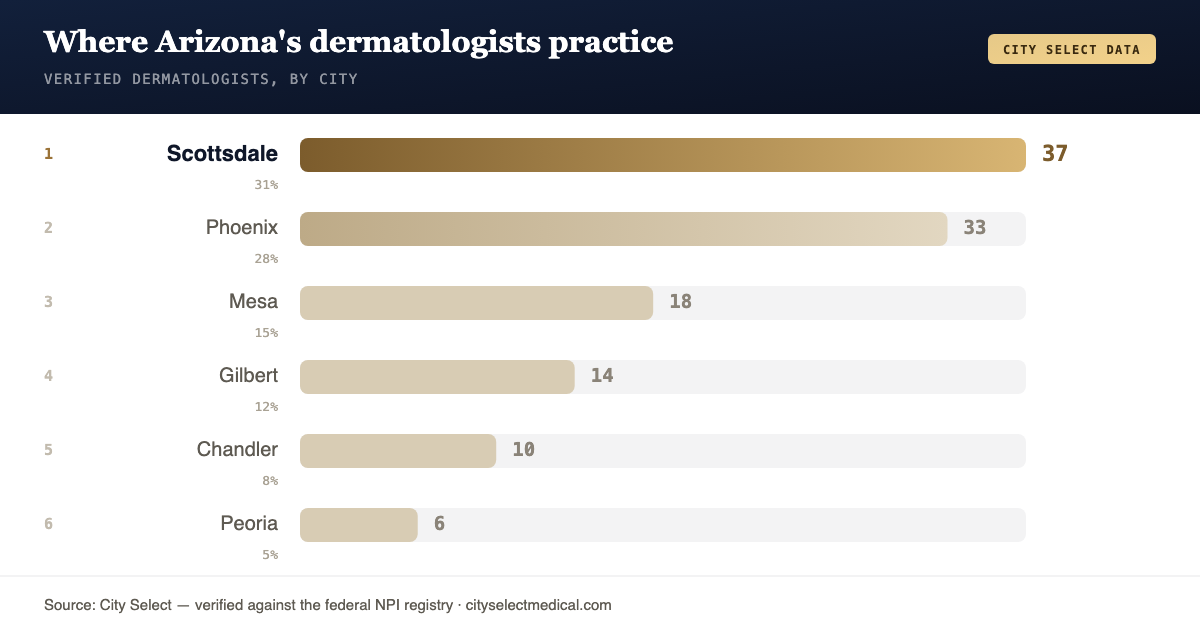
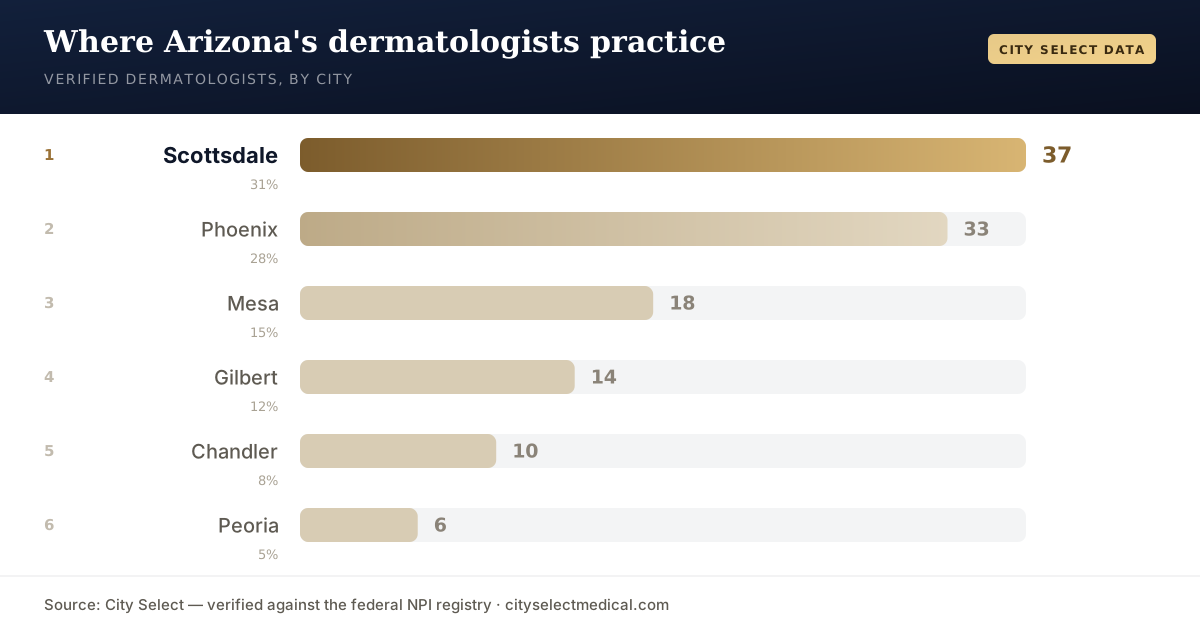
99 NPI-verified dermatologists across 33 Arizona cities — including 63 confirmed to accept Medicare. Filter by city and the insurance they publish, and confirm Mohs and in-network status with the practice before you book.
05 · RECOVERYRecovery and planning ahead
Recovery is generally straightforward, but it's genuinely individual — the size, depth, and location of the cancer and whether you needed reconstruction all shape it. Treat the general picture here as orientation and let your surgeon's specific instructions govern.
The first days
You'll go home with a bandage and wound-care instructions — typically keeping the area clean and covered, limiting strenuous activity, and managing soreness as directed.
The following weeks
The wound heals over a few weeks; facial or reconstructed sites can take longer. Your surgeon schedules follow-up and tells you when normal activity is fine.
When to call
Ask your surgeon exactly what warrants a call — increasing pain, redness, bleeding, or signs of infection — so you know the line between normal healing and a reason to check in.
Clear the day and line up a ride. Even though it's local anesthetic, plan for a long day of waiting and arrange for someone to drive you home — especially if the site is near your eyes or on your hands, or if reconstruction is likely.
The ranges you read are typical, not a promise. How fast you heal depends on your case, and your surgeon's timeline beats any generic number — including the ones here. If your recovery looks different from a blog's tidy schedule, that's normal; your case is the one that matters.
The best recovery plan is the one your Mohs surgeon writes for your specific wound — ask for it in writing, including exactly what to watch for.
The bottom line
Mohs surgery sounds daunting and usually isn't: it's a precise, single-visit, local-anesthetic procedure with among the highest success rates in skin cancer, and because it treats cancer it's medically necessary — so insurance and Medicare generally cover it, leaving you your plan's cost-share rather than the full self-pay figure. Confirm the surgeon and any reconstruction are in-network, and ask for an estimate that reflects your coverage.
Then plan the day around the waiting, not the cutting, and let your surgeon's instructions — not an online timeline — guide your recovery. Get those pieces lined up and what's left is a well-understood procedure with a very good track record, done close to home.
Frequently asked questions
How much does Mohs surgery cost in Arizona?
Self-pay, a simple 1–2 stage Mohs case commonly runs about $1,500–$2,500, while a larger, multi-stage cancer can reach $3,000–$5,000 or more, with reconstruction billed on top for grafts or flaps. Complex facial cases can go higher. But Mohs is usually billed to insurance because it's medically necessary — many people don't pay the full self-pay figure. Ask for a Good Faith Estimate that reflects your coverage.
Does insurance or Medicare cover Mohs surgery?
Yes. Because Mohs treats skin cancer, it's medically necessary, and private insurers and Medicare generally cover it — including the surgery, the microscopic tissue exam, and medically necessary reconstruction. With Medicare Part B you typically pay 20% coinsurance after your deductible. Your exact share depends on your plan, so confirm the surgeon is in-network first.
What is Mohs surgery and why is it done in stages?
Mohs removes skin cancer one thin layer at a time; after each layer, the surgeon examines it under a microscope right there and only removes more if cancer remains. That staged, real-time checking is why it has among the highest success rates and spares the most healthy skin — which matters for cancers on the face, ears, nose, and hands. The Skin Cancer Foundation reports success rates up to 99% for new basal cell cancers.
How long does Mohs surgery take?
Plan for most of the day, even though the actual cutting is brief. It's a single outpatient visit, but you wait in the office between stages while the tissue is examined — often a few hours total, sometimes more if several stages are needed. It's done under local anesthetic, so you're awake and can usually drive concerns aside — arrange your day around waiting, not around a hospital stay.
What is recovery from Mohs surgery like?
Generally, you leave with a bandage and wound-care instructions, keep the area clean and covered, and heal over a few weeks — though it varies with the size, depth, and location of the cancer and whether reconstruction was needed. Your surgeon gives you a timeline based on your case and tells you what to watch for. Treat any ranges you read online as orientation, not a promise.
Will I need reconstruction after Mohs?
Sometimes. Small wounds may heal on their own or with simple stitches; larger ones — often on the face — may need a skin graft or flap, done the same day. Reconstruction adds to the cost and the recovery, and it's covered when medically necessary. Your surgeon will discuss the closure plan before the procedure.
Find a verified dermatologist in Arizona
Every dermatologist on City Select is sourced from the federal NPI registry and organized by city and specialty — no pay-to-rank, no mystery. Filter by your city and insurance:
 Choosing Care
Dermatology in Arizona: Costs, Insurance & How to Choose a Dermatologist
Arizona runs one of the highest melanoma rates in the U.S. — so a good dermatologist matters more here. A plain-English guide to what visits and procedures cost, what your plan (and AHCCCS) covers, how skin checks actually work, and how to pick — and verify — the right board-certified derm.
 Insurance & Costs
How Much Does a Dermatologist Cost in Arizona? (2026)
What a dermatologist really costs in Arizona: the office visit, the procedures billed on top, why 'I have insurance' doesn't always mean a small copay, and the moves — cash price, Good Faith Estimate, financing — that lower the bill.
 Insurance & Costs
Does Insurance (and AHCCCS) Cover a Dermatologist in Arizona?
Whether insurance, AHCCCS, or Medicare pays for a dermatologist in Arizona comes down to one rule — medical is covered, cosmetic isn't. Here's how that plays out, the referral and prior-auth catches, and the surprise bills to head off before you book.
Written by the City Select editorial team and edited by Alan S., Senior Editor. Drafted with AI assistance and checked against the official sources below. City Select is not a healthcare provider, and this guide is not medical advice. Our editorial & data standards →
This guide is for general information and isn't medical, legal, or insurance advice. Coverage, prices, and policies change — verify current details with the relevant provider, plan, or agency, and confirm with the practice before booking. Last updated July 15, 2026.