
Does Insurance (and AHCCCS) Cover a Dermatologist in Arizona?
Almost every question about dermatology coverage collapses into a single rule: insurance pays when a dermatologist is treating a condition, and not when they're improving appearance. Acne, eczema, a changing mole, skin cancer, a stubborn rash — that's medical, and it's generally covered. Botox, fillers, a mole removed just because you don't like it — that's cosmetic, and it's on you. Hold onto that line and most of the confusion clears.
The details are where people get surprised: whether AHCCCS or Medicare applies, whether you need a referral, and how a "covered" skin check can still produce a bill. This guide walks through all of it — the rule, the public-coverage specifics, and the surprise bills worth heading off — then points you to 142 verified dermatologists across Arizona to compare by the insurance they publish.
- Medical is covered: acne, eczema, psoriasis, moles, skin cancer, rashes — by insurance, AHCCCS, and Medicare, subject to your deductible/copay and network.
- Cosmetic isn't: Botox, fillers, cosmetic mole/skin-tag removal, aesthetic lasers and peels are self-pay.
- Mind the catches: many HMO and AHCCCS plans need a referral, some services need prior authorization, and a covered screening can still bill if a biopsy or removal happens.
01 · THE RULEMedical vs. cosmetic — the line that decides everything
The single most useful thing to understand about dermatology coverage is that insurers pay by why, not just what. The exact same procedure can be covered or not depending on the reason it's done — which is why "is this covered?" so often gets a frustrating "it depends."
"If a mole or spot bothers me, removing it is medical." Bothering you cosmetically isn't the same as being medically necessary. If a lesion is changing, suspicious, painful, bleeding, or catching on clothing, there's usually a medical case and it's typically covered. If it's removed purely for looks, it's cosmetic and self-pay — even at a medical dermatology practice, even by the same doctor, in the same chair.
The reason for the visit drives the coverage — so state it clearly and ask how it'll be coded. A visit booked to check a worrying mole is medical; the identical visit booked "to smooth out my skin" is cosmetic. If coverage matters, tell the office the medical reason and ask, before anything is done, whether the specific service will be coded and billed as medical.
02 · PUBLIC COVERAGEAHCCCS and Medicare, specifically
Arizona's public coverage follows the same medical-vs-cosmetic rule, with a few specifics worth knowing before you book.
"AHCCCS doesn't cover a dermatologist." It does — for medically necessary dermatology, through its managed-care health plans, and members typically pay $0 for covered services. What trips people up isn't whether it's covered but how you access it: you pick a plan for your ZIP and a primary care doctor, and the path to the dermatologist runs through that plan's rules.
Check your plan's referral rule first — it varies by plan. Many PPOs let you self-refer; HMOs and several AHCCCS plans (Mercy Care, Care 1st, and UnitedHealthcare Community Plan among them) often require a referral from your primary care doctor. Some services also need prior authorization, which your provider arranges. A five-minute call prevents a denied claim.
Confirm the plan covers the derm
Check the dermatologist is in your plan's network — for AHCCCS, that means your specific managed-care plan, not "AHCCCS" in general.
Ask about referral and prior auth
Find out whether you need a PCP referral and whether the planned service needs prior authorization before the visit.
Confirm it's coded medical
Make sure the reason for the visit is a medical one and will be billed that way — cosmetic add-ons stay self-pay.
Medicare works the same way: it covers medically necessary dermatology under Part B — screening when there's a medical reason, biopsies, treating conditions — subject to the deductible and coinsurance, and never cosmetic work. In our directory, 62 dermatologists are confirmed to accept Medicare, filterable so you can shortlist ones that take it.
03 · SURPRISE BILLSWhy a "covered" visit can still bill you
Coverage isn't the same as free, and the gap between the two is where most surprise bills live. None of these are billing errors — they're how the system works, and each one is avoidable with a question up front.
How coverage and coding actually work
A single dermatology appointment can contain several billable services, and they're not all covered the same way. A preventive skin check may be covered — but the moment the dermatologist biopsies a spot or removes a lesion, that's a separate, billable procedure, and the pathology lab bills separately for reading the sample. A visit that starts preventive and turns into diagnosing or treating a problem can generate legitimate cost-sharing on the problem portion. Insurers pay against codes, so the same visit can be fully covered, partly covered, or self-pay depending on what's done and how it's coded. The way to stay ahead of it is simple: ask what will be billed before it's done.
Confirm the pathology lab is in-network, not just the practice. A biopsy generates two bills — the dermatologist for taking the sample, a separate lab for reading it. Your derm can be in-network while the lab isn't, which is exactly how an in-network visit produces an out-of-network bill. Ask which lab they use.
"Covered" and "free" aren't the same word. A covered screening that finds something can still bill you for the follow-up — ask what's billable before it happens.
04 · FROM THE WEBQuestions people are actually asking
Will AHCCCS pay for a skin check?
For a medically necessary one — a suspicious spot, a skin-cancer history — generally yes, through your managed-care plan, often at $0. A purely cosmetic skin concern isn't covered. Referral rules vary by plan, so check first.
Is acne treatment covered by insurance?
Medical acne treatment — prescriptions, in-office procedures for active acne — is generally covered. Cosmetic treatment of *acne scars* usually isn't. The active condition is medical; the appearance of old scarring is cosmetic.
Does insurance cover getting a skin tag removed?
Usually not — skin-tag removal is typically considered cosmetic unless the tag is irritated, bleeding, or catching and causing a medical problem. Ask whether yours meets a medical criterion.
My dermatologist is in-network but I still got a big bill — why?
Most likely a separate pathology-lab charge, a procedure billed on top of the visit, or your deductible. Ask the office to itemize and confirm the lab is in your network.
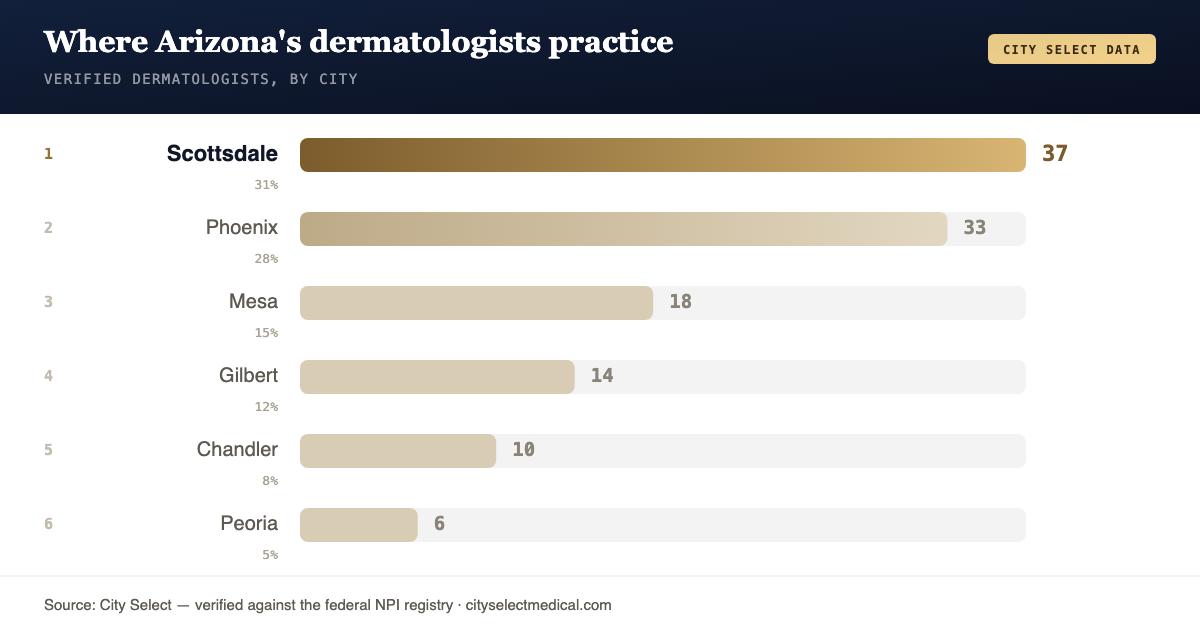
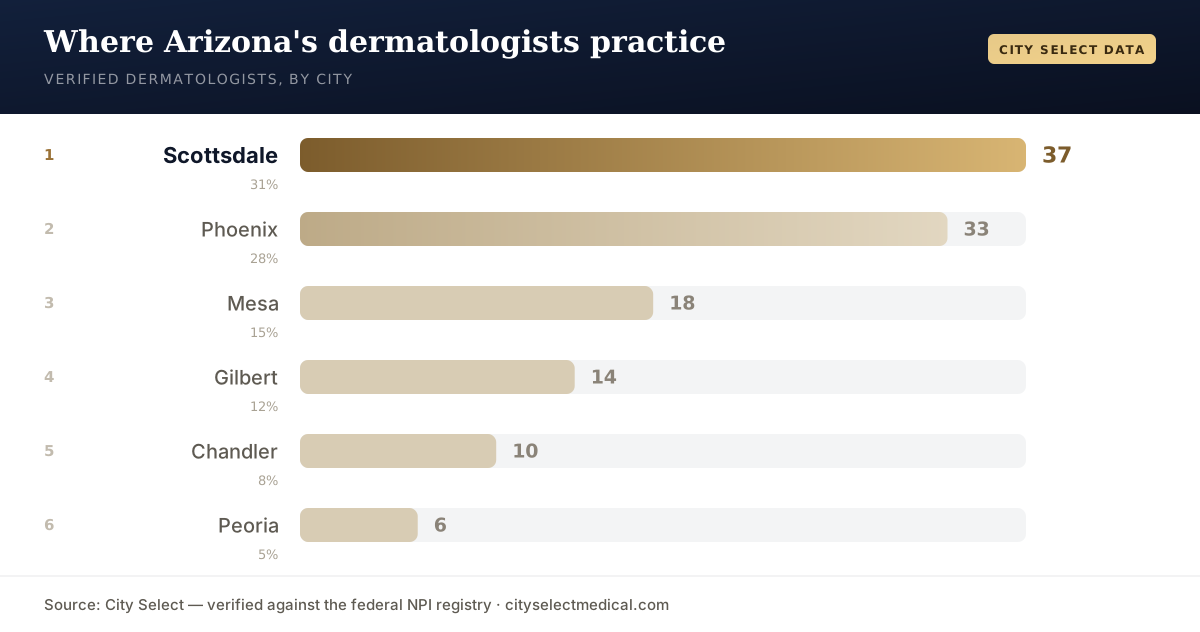
142 NPI-verified dermatologists across 32 Arizona cities — including 62 confirmed to accept Medicare. Filter by city and the insurance they publish, then confirm your specific plan and any referral rule before you book.
05 · CONFIRMHow to confirm coverage before you book
You can settle almost all of this with a couple of phone calls and one directory filter. The goal is simple: walk in already knowing what your plan will pay.
Filter for your coverage
In the City Select directory, narrow to dermatologists who publish your insurance, then verify with the practice — published isn't the same as in-network for your exact plan.
Call your plan
Confirm the dermatologist is in-network, whether you need a referral, and whether the planned service needs prior authorization.
Call the practice
Confirm they take your plan, ask which pathology lab they use and whether it's in your network, and ask for the medical vs. cosmetic split if your visit is a mix.
Get the answers in writing where you can. A note in your patient portal or an email confirming network status and referral requirements is worth more than a remembered phone call if a claim is later denied.
Arizona-specific: AHCCCS coverage runs through the managed-care plan you pick for your ZIP, and referral rules differ across those plans — so "does AHCCCS cover dermatology" has the same answer statewide (yes, for medical care) but the path to the visit depends on your plan. Eligibility thresholds change, so confirm current details at azahcccs.gov rather than relying on a figure you saw last year.
In-network plus correct coding is what actually protects you. Coverage exists for medical dermatology across insurance, AHCCCS, and Medicare — but the surprise bills come from network gaps (especially the pathology lab) and from cosmetic work billed as though it were covered. Confirm both, and a covered visit stays a covered visit.
Settle it before the appointment: in-network practice, in-network lab, medical coding, referral if required. Four questions, no surprises.
The bottom line
Whether a dermatologist is covered in Arizona comes down to one rule and a few catches. Medical care — acne, eczema, moles, skin cancer — is generally covered by insurance, AHCCCS, and Medicare; cosmetic work is self-pay. The reason for the visit, and how it's coded, is what decides which bucket you're in.
Then handle the catches before you book: confirm the practice and its pathology lab are in your network, ask whether your plan needs a referral or prior authorization, and know that a covered screening can still bill you if a biopsy or removal happens. Get those settled up front and coverage stops being a guessing game.
Frequently asked questions
Does insurance cover a dermatologist in Arizona?
For medically necessary care — acne, eczema, psoriasis, suspicious moles, skin cancer, rashes, and infections — yes, insurance generally covers a dermatologist, subject to your deductible, copay, and network. Cosmetic treatments (Botox, fillers, cosmetic mole or skin-tag removal, aesthetic lasers and peels) are not covered and are self-pay. The rule of thumb: plans pay when it treats a condition, not when it improves appearance.
Does AHCCCS cover dermatology?
Yes, for medically necessary dermatology — AHCCCS (Arizona's Medicaid program) covers it through its managed-care health plans, and members typically pay $0 for covered services. You choose a plan for your ZIP and a primary care doctor, and depending on the plan you may need a referral before the dermatology visit is covered. Cosmetic care isn't included. Confirm specifics and current eligibility with your plan and at azahcccs.gov.
Does Medicare cover a dermatologist?
Medicare covers medically necessary dermatology — skin-cancer screening when there's a medical reason, biopsies, treatment of conditions — under Part B, subject to the deductible and coinsurance. It does not cover cosmetic procedures. In our directory, dermatologists confirmed to accept Medicare are filterable, so you can shortlist ones that take it.
Do I need a referral to see a dermatologist in Arizona?
It depends on your plan. Many PPOs let you self-refer. HMO plans and several AHCCCS plans — Mercy Care, Care 1st, and UnitedHealthcare Community Plan among them — often require a referral from your primary care doctor first. Some services also need prior authorization, which your provider arranges. Check before booking so a covered visit doesn't turn into a denied claim.
Is mole removal covered by insurance?
It depends why it's being removed. A mole that's changing, suspicious, or symptomatic is medical — removal and the biopsy are generally covered when medically necessary. A mole removed purely because you don't like how it looks is cosmetic and self-pay. The same procedure can go either way; the reason, and how it's coded, decide coverage.
Why did I get a bill after a 'covered' skin check?
Usually because the visit turned up something. A screening exam may be covered, but if the dermatologist takes a biopsy or removes a lesion, that's a separate, billable service — and the pathology lab bills separately too. A preventive visit that shifts into diagnosing or treating a problem can generate cost-sharing on the problem portion. It's legitimate and common; ask what will be billed before it's done.
Find a verified dermatologist in Arizona
Every dermatologist on City Select is sourced from the federal NPI registry and organized by city and specialty — no pay-to-rank, no mystery. Filter by your city and insurance:
 Choosing Care
Dermatology in Arizona: Costs, Insurance & How to Choose a Dermatologist
Arizona runs one of the highest melanoma rates in the U.S. — so a good dermatologist matters more here. A plain-English guide to what visits and procedures cost, what your plan (and AHCCCS) covers, how skin checks actually work, and how to pick — and verify — the right board-certified derm.
 Insurance & Costs
How Much Does a Dermatologist Cost in Arizona? (2026)
What a dermatologist really costs in Arizona: the office visit, the procedures billed on top, why 'I have insurance' doesn't always mean a small copay, and the moves — cash price, Good Faith Estimate, financing — that lower the bill.
 Choosing Care
How to Choose a Dermatologist in Arizona (and Verify Board Certification)
Choosing a dermatologist in Arizona isn't about a lack of options — it's knowing who's genuinely qualified for what you need. How to verify board certification yourself, match the right kind of derm to your concern, spot the red flags, and check who'll actually be in the room.
Written and maintained by the City Select editorial team. Every figure is checked against the official sources below, and every practice in our directory is verified against the federal NPI registry — no pay-to-rank and no purchased placement in the verified results. See our editorial & data standards →
This guide is for general information and isn't medical, legal, or insurance advice. Coverage, prices, and policies change — verify current details with the relevant provider, plan, or agency, and confirm with the practice before booking. Last updated July 15, 2026.